
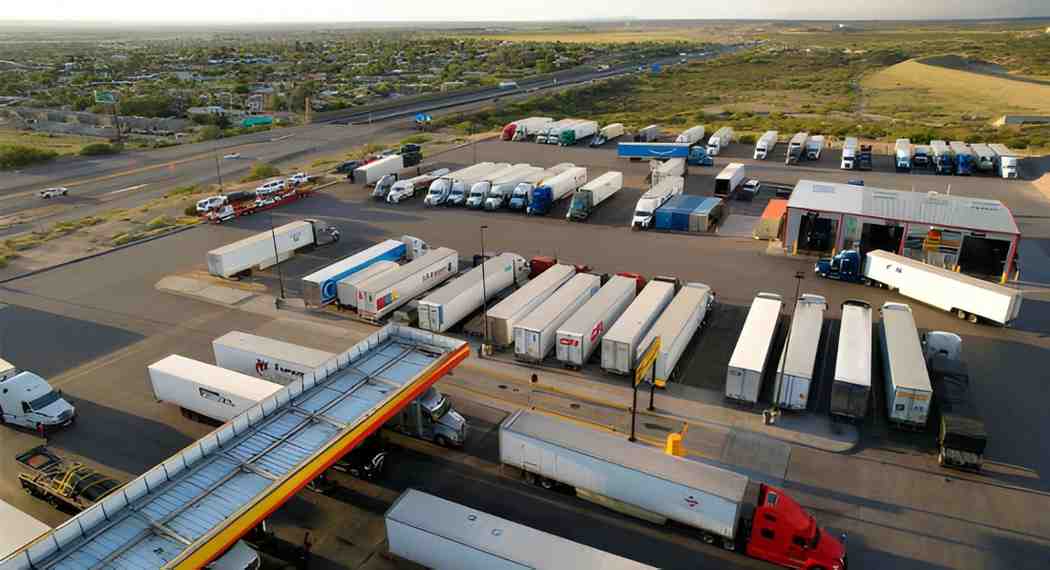

When I first began exploring the logistics industry, I was instantly drawn to the massive economic engine of the Lone Star State. Texas moves billions of tons of freight every single year, serving as the primary hub for cross-border trade, energy production, and manufacturing distribution in America. I realized early on that designing a strategy specifically for beginners trucking business in Texas USA could provide an incredible pathway to building a sustainable, highly lucrative company. However, the sheer volume of entry requirements, state and federal permits, truck financing structures, and insurance regulations can feel incredibly intimidating when you are starting from zero. Over the years, I have gathered, tested, and documented the exact systems required to build a compliant and highly profitable fleet here. In this extensive guide, I will share the real-world operational insights, financial formulas, and step-by-step frameworks you need to go from a beginner to a successful transportation owner.
The Texas transportation landscape offers immense opportunities, but it is also highly demanding and requires strict cost management. Whether your goal is to operate as an independent owner-operator behind the wheel or build a multi-vehicle freight enterprise managed from a home office, you must understand how state and federal regulatory frameworks intersect. Let us unpack the core phases of launching your logistics company without making the costly mistakes that frequently sink new operators.
Table of Contents
Demystifying the Texas Freight Infrastructure for Beginners
Before you commit your hard-earned savings to down payments or filing fees, you need to understand how freight moves across this massive territory. Texas features a unique geographic advantage known as the Texas Triangle, formed by the highway corridors connecting Dallas-Fort Worth, Houston, Austin, and San Antonio. This region contains the majority of the state’s exploding population and acts as a continuous loop of high-volume commercial freight.
The specific type of equipment you invest in should align directly with the sub-region where you base your operations. If you are launching in the Dallas-Fort Worth metroplex, you are operating within a global e-commerce fulfillment nexus where consumer goods require an endless supply of dry van trailers. If you head south toward the Gulf Coast around Houston or Beaumont, the market shifts dramatically toward intermodal drayage from maritime ports and specialized liquid tankers for the massive petrochemical plants. Out in West Texas, the Permian Basin creates a constant, high-paying demand for flatbeds, heavy-haul equipment, and pneumatic trailers transporting oilfield machinery and materials.
For beginners, specializing in a single freight type within your local region is the safest and most efficient path forward. Trying to haul every style of cargo early on forces you to purchase multiple trailer types, increases your initial overhead, and dilutes your ability to build deep relationships with regional brokers and direct shippers.
Structuring Your Corporate Entity Legally and Safely
Operating a commercial transportation company involves significant inherent risks. Because your vehicles weigh up to 80,000 pounds and spend thousands of hours on high-speed public highways, you must establish a solid corporate barrier to protect your personal assets. If a vehicle in your fleet is involved in a severe highway accident, an improper legal setup can expose your home, your savings, and your personal investments to devastating court judgments.
I highly recommend establishing either a Limited Liability Company (LLC) or an S-Corporation for your logistics business. For the vast majority of startups, a multi-member or single-member LLC offers the perfect blend of robust liability shielding and simple pass-through taxation. You will file your official Certificate of Formation online through the Texas Secretary of State portal, known as SOSDirect.
Your chosen corporate name must be completely unique and explicitly include a designation such as “LLC” or “Limited Liability Company.” If you plan to market your business, paint logos on your trucks, or secure freight contracts under a brand name that differs from your formal legal LLC registration, you must file an Assumed Name Certificate, commonly known as a DBA (Doing Business As). This form must be filed with both the Texas Secretary of State and the local county clerk’s office where your primary truck yard or administrative office is physically located.
For Beginners Trucking Business in Texas USA: Securing Intrastate Authority
If you want to grasp the legal foundations for beginners trucking business in Texas USA, you must understand how operating authority is granted. The first major operational decision you must make is whether your trucks will cross state borders or remain exclusively within the boundaries of the state of Texas.
If you choose to run your trucks purely within the state lines of Texas, you are classified as an intrastate carrier. Your primary regulatory authority is the Texas Department of Motor Vehicles (TxDMV). To legally haul commercial loads within the state, you must apply for a TxDMV number, which is often referred to as a TxDOT number.
Securing your TxDMV credentials requires you to submit an official application, pay a registration fee based on the number of commercial motor vehicles in your active fleet, and have your insurance provider submit electronic proof of your commercial liability insurance directly into the state system. Intrastate operations are excellent for beginners because they keep your drivers closer to home, reduce travel overhead, and insulate your business from the more complex fuel tax tracking required across multiple state lines.
For Beginners Trucking Business in Texas USA: Navigating Interstate FMCSA Registration
If your growth plan involves hauling freight out of Texas into neighboring states like Louisiana, Oklahoma, Arkansas, or New Mexico, you enter the realm of interstate commerce. When analyzing the best path for beginners trucking business in Texas USA regarding long-haul freight, you must look directly to federal regulations.
Interstate carriers must secure operating authority from the Federal Motor Carrier Safety Administration (FMCSA). This process requires you to secure a federal USDOT number and an MC (Motor Carrier) number. The application process is handled through the online Unified Registration System (URS) and carries a mandatory federal filing fee.
The Critical FMCSA Authority Activation Checklist
Once your initial federal application is submitted, the FMCSA initiates a mandatory 21-day public protest period during which your application is published in the Federal Register. To ensure your operating authority is successfully activated immediately following this vetting window, you must complete two critical compliance steps:
- Filing the BOC-3 Form: You must submit a Designation of Process Agents form. This document officially assigns legal representatives in every state you intend to travel through who are authorized to receive legal notices and official court documents on your company’s behalf.
- Submitting Proof of Insurance: Your commercial insurance underwriter must log into the FMCSA portal and upload your formal proof of liability and cargo insurance coverage. If these electronic certificates are not uploaded within the designated timeframe, your application will be dismissed, forcing you to restart the process and repay the registration fees.
Calculating Startup Capital and Essential Working Capital Reservoirs
One of the most common reasons new transportation businesses fail within their first twelve months is severe undercapitalization. Logistics is a cash-flow-intensive industry. You will face immediate, massive cash outflows for diesel fuel, equipment payments, driver salaries, and insurance premiums from your very first week of operations. However, the majority of reputable commercial brokers and direct shippers do not pay immediately upon delivery; they operate on standard net-30, net-45, or even net-60 payment terms.
This means your business could easily haul forty or fifty loads over a two-month period before receiving a single dollar of invoice revenue. Therefore, you must establish an accurate working capital reserve from day one. Let us look at a foundational financial formula designed to calculate the minimum cash runway a beginner needs to bridge this initial operational gap:
\text{Minimum Working Capital} = (\text{Monthly Truck Payment} + \text{Monthly Insurance Premium} + \text{Projected Fuel Cost} + \text{Driver Payroll}) \times 2.5
By multiplying your total projected monthly operating expenses by a factor of 2.5, you build a vital financial cushion that protects your business from sudden cash flow bottlenecks while your initial invoices are processed.
Mastering Cost Per Mile Calculations for Beginners Trucking Business in Texas USA
To maintain a highly profitable fleet, you must transition away from vague estimations and learn how to track your numbers with absolute mathematical precision. In the logistics sector, every business decision revolves around a single metric: your operational Cost Per Mile (CPM). When developing systems for beginners trucking business in Texas USA, understanding this formula is what separates profitable operators from those driving themselves into bankruptcy.
To calculate your true CPM, you must track every single penny that leaves your business bank account and divide those expenses into either fixed costs or variable costs. Fixed costs are expenses your business incurs regardless of whether your trucks run one mile or ten thousand miles a month (such as equipment lease payments, insurance premiums, permits, and corporate tracking software). Variable costs are expenses that fluctuate in direct proportion to the distance your trucks travel (such as diesel fuel, driver mileage pay, tire replacements, and scheduled maintenance).
Let us analyze the mathematical equation required to determine your operational Cost Per Mile:
\text{Cost Per Mile} = \frac{\text{Total Fixed Costs} + \text{Total Variable Costs}}{\text{Total Miles Driven}}
Let us apply this formula to a practical business scenario. If your combined fixed and variable operational expenses for a single truck over a month total $13,500, and that specific asset logged exactly 6,000 miles on the road, your true Cost Per Mile is exactly $2.25. Therefore, if a broker offers you a load paying $2.10 per mile for a specific lane, you know instantly that accepting that freight will cause your business to lose $0.15 for every single mile driven.
Equipment Strategies: Choosing Between New, Used, and Leased Trucks
Your trucks and trailers represent the largest physical capital investments your transportation company will make. For a beginner, making the wrong equipment decision can permanently burden your business with excessive repair costs or unmanageable monthly debts. You must carefully weigh the financial trade-offs of purchasing new equipment, buying used vehicles, or entering into corporate operating leases.
New commercial equipment offers exceptional reliability, maximum fuel efficiency, and comprehensive factory warranties that protect your business from sudden, expensive mechanical failures. The downside is that new trucks command premium purchase prices and substantial down payments, heavily inflating your fixed monthly costs. Used equipment features a significantly lower entry cost, which helps preserve your initial capital reserves. However, used trucks carry an inherent risk of frequent over-the-road breakdowns and expensive out-of-warranty engine repairs.
| Equipment Option | Upfront Capital Required | Monthly Fixed Cost | Warranty Protection | Risk of Downtime |
| New Truck Purchase | Very High | High | Comprehensive | Very Low |
| Used Truck Purchase | Moderate | Low to Moderate | Limited or None | High |
| Operating Lease Contract | Low | High | Often Included | Low to Moderate |
Technical Verification Checklist for Used Trucks
If you choose to purchase used equipment to protect your initial capital reserves, never buy a commercial vehicle without a rigorous technical inspection. I always require a full Electronic Control Module (ECM) data printout to verify the truck’s actual historical mileage, lifetime engine hours, and historical fault codes.
Additionally, perform a professional laboratory oil analysis to look for internal engine metal wear, and thoroughly check the health of the Diesel Particulate Filter (DPF) and Exhaust Gas Recirculation (EGR) systems. Fixing a failed emissions system on a modern diesel truck can easily cost upwards of $10,000, which can instantly drain a beginner’s cash reserves.
Securing and Structuring Commercial Insurance Packages
You cannot activate your operating authority or book a single load of freight without securing a comprehensive commercial transportation insurance policy. Insurance is one of the highest ongoing operational costs in the logistics industry, and underwriters evaluate new carriers with extreme scrutiny.
While the federal government legally mandates a minimum of $750,000 in public liability insurance for interstate carriers, this baseline is insufficient for real-world operations. Almost every reputable freight broker and direct shipper in the United States will completely refuse to work with your company unless you carry a minimum of $1,000,000 in primary auto liability coverage, plus at least $100,000 in cargo insurance to protect the physical goods inside your trailer against damage or theft.
Practical Steps to Lower Your Annual Insurance Premiums
Because you are entering the market as a new business venture without a multi-year safety track record, your initial insurance quotes will be high. However, you can implement several operational strategies from day one to lower your annual premiums:
- Install Certified Dual-Facing Dashcams: Video telematics protect your business from fraudulent insurance claims and provide immediate proof when your driver is not at fault in an incident.
- Enforce Strict Speed Limits via ELD Integration: Use your Electronic Logging Devices to monitor driver speeds, aggressive cornering, and hard-braking events in real time.
- Hire Only Clean Motor Vehicle Record (MVR) Drivers: Do not employ drivers who have serious moving violations or preventable accidents within the past three to five years.
- Implement an Active Safety Policy Manual: Create a culture of safety by establishing clear, written policies regarding mobile phone use, pre-trip vehicle checks, and mandatory defensive driving training.
Navigating Regulatory Frameworks for Beginners Trucking Business in Texas USA
Remaining fully compliant with the dense web of trucking laws is a daily operational necessity. Failing to manage your regulatory filings can result in heavy state fines, safety downgrades, or the immediate suspension of your business operations.
The International Fuel Tax Agreement (IFTA)
If your commercial motor vehicles cross state lines, you are required to register for the International Fuel Tax Agreement through the Texas Comptroller of Public Accounts. IFTA simplifies how fuel consumption taxes are calculated and paid by carriers operating across multiple states.
Every calendar quarter, you must report the exact total miles driven and the exact number of gallons of diesel purchased in each state. The IFTA system calculates whether you owe additional fuel taxes or are due a tax credit based on where your trucks traveled versus where the fuel taxes were paid at the pump. Missing these quarterly filing deadlines can trigger costly state audits and fuel credential suspensions.
International Registration Plan (IRP) and Unified Carrier Registration (UCR)
To operate seamlessly across state lines, you must register your trucks under the International Registration Plan (IRP). The IRP distributes your commercial vehicle registration fees across various states based on the percentage of total miles your fleet travels in each territory. Instead of buying individual trip permits every time your truck crosses a state line, you receive an apportioned license plate and a detailed cab card.
Additionally, you must complete your annual Unified Carrier Registration (UCR). The UCR is a mandatory federal fee system applied to all interstate transport operators, with tiered rates that scale based on the total number of commercial vehicles in your fleet.
Building a Reliable Freight Pipeline: Load Boards to Direct Shippers
Once your trucks are fully legal, permitted, and insured, you need to find consistent cargo to move. Generating steady revenue requires a smart, balanced approach to booking freight.
Utilizing Digital Load Boards for Early Freight
When your authority is brand new, digital load boards like DAT, Truckstop, and 123Loadboard are vital tools for keeping your trucks moving and generating immediate revenue. These platforms allow you to search thousands of available daily broker loads based on your current truck location, trailer style, and preferred destination.
However, relying entirely on load boards exposes your company to spot-market rate volatility. Spot rates fluctuate constantly based on seasonal freight surges, equipment capacity shifts, and broader economic cycles.
Securing Lucrative Direct Shipper Contracts
The true key to long-term profitability and scaling your fleet is moving away from spot-market brokers and securing contracts directly with manufacturers, distribution hubs, agricultural producers, and industrial plants.
Direct shippers value operational reliability, consistent communication, and safety above all else. When you deal directly with a shipper, you bypass the middleman broker fees, which allows you to secure stable, predictable freight lanes with significantly higher profit margins. Build a professional company website, create a clean digital carrier packet, and highlight your on-time delivery percentages to win these premium accounts.
Managing Fuel Expenses and Fuel Efficiency Metrics
Fuel consumption is your largest ongoing variable expense, often accounting for up to 40% of a carrier’s total operating costs. Minor fluctuations in diesel prices can heavily impact your weekly profitability if you lack a clear fuel management strategy.
To see how small changes in fuel efficiency directly impact your bottom line, let us look at a financial formula to calculate your total annual fuel expense based on your fleet’s average miles per gallon:
\text{Annual Fuel Cost} = \left( \frac{\text{Total Annual Fleet Miles}}{\text{Average Miles Per Gallon}} \right) \times \text{Average Cost of Diesel per Gallon}
If a single truck in your fleet travels 110,000 miles in a year, diesel prices average $4.00 per gallon, and your vehicle averages 6.0 miles per gallon, your annual fuel cost is $73,333. If you train your driver to reduce idle time, maintain optimal tire pressure, and lower their cruising speed to improve efficiency to 7.0 miles per gallon, your annual fuel cost drops to $62,857. That single operational shift saves your company $10,476 per year on just one truck.
Using Freight Factoring to Maintain Fluid Cash Reserves
Even if your trucks are moving profitable freight, your business can fail if you run out of physical cash while waiting for brokers or shippers to pay their net-45 invoices. To bridge this cash flow gap, many growing fleets use freight factoring services.
Freight factoring is a financial arrangement where you sell your open commercial invoices to a specialized factoring company in exchange for immediate cash. Instead of waiting weeks for a check to arrive, you upload your completed bill of lading and rate confirmation to the factoring company, and they advance up to 95% to 98% of the total invoice value into your bank account within 24 hours. Once the broker pays the invoice at the end of the net term, the factoring company releases the remaining held funds, minus their agreed transaction fee.
Recruiting and Retaining Professional CDL Drivers
As your business grows beyond a single truck, your primary bottleneck to scaling will be finding and retaining professional, reliable Commercial Driver’s License (CDL) holders. Driver turnover is incredibly costly, making a solid recruiting and retention strategy vital.
Designing a Competitive Driver Program
To attract drivers who will treat your expensive equipment with care and represent your brand well to your direct shippers, you must offer a strong compensation package. While paying a clean per-mile rate (CPM) is the industry standard, many modern fleets find great success by offering guaranteed weekly base salaries, performance-based safety bonuses, and comprehensive health insurance benefits.
Additionally, prioritize giving your drivers predictable home time. Running regional freight routes across the Texas Triangle allows your drivers to return home to their families multiple times during the week, making your company far more attractive than long-haul operations that keep drivers over-the-road for weeks at a time.
Implementing Rigorous Driver Screening Processes
Before handing over the keys to an expensive tractor-trailer to a new hire, always conduct thorough background and safety checks to protect your business liability:
- Review Pre-Employment Screening Program (PSP) Records: This federal database provides a detailed five-year history of a driver’s crash records and a three-year history of roadside inspection violations.
- Query the FMCSA Drug and Alcohol Clearinghouse: You are legally mandated to check this database to ensure a prospective driver does not have any unresolved drug or alcohol program violations.
- Conduct Pre-Employment Drug Testing: Enforce a strict DOT-compliant pre-employment drug screen, and enroll all active drivers into a mandatory random drug testing consortium pool.
Conclusion
Mastering a clear framework for beginners trucking business in Texas USA is an empowering path that combines strategic financial calculations, strict regulatory compliance, and consistent operational focus. By setting up a secure corporate structure, obtaining your state or federal operating authority, tracking your true Cost Per Mile, and prioritizing driver retention and fuel efficiency, you can build a resilient, highly profitable logistics enterprise in the heart of the American freight market.
Always remember that scaling a transport business is a marathon, not a sprint. Focus on protecting your profit margins, building direct relationships with reliable shippers, and leveraging modern logistics technology to optimize your fleet efficiency. With dedication, clear operating systems, and an unyielding commitment to highway safety, your new transportation venture can thrive and grow for decades to come.
Frequently Asked Questions
Do I need a Commercial Driver’s License (CDL) to own a trucking business in Texas?
No, you do not need a CDL to own or operate a transportation company in Texas, provided you hire qualified, licensed CDL drivers to operate your commercial motor vehicles.
How long does it take for the FMCSA to activate my commercial operating authority?
The entire registration process generally takes between 5 to 7 weeks, which includes the mandatory 21-day public protest period following your application submission.
What is the primary difference between interstate and intrastate operating authority?
An intrastate carrier operates exclusively within the physical boundaries of a single state, whereas an interstate carrier crosses state lines or handles freight that originates out of state.
How much capital is realistically required to launch an independent trucking business?
While your startup costs depend heavily on your equipment model, having between $15,000 to $30,000 in fluid working capital per truck is highly recommended to cover initial insurance down payments, fuel, and early driver wages.
What is the purpose of an IFTA permit for commercial motor carriers?
The International Fuel Tax Agreement simplifies how fuel consumption taxes are calculated and paid for commercial fleets operating across multiple state jurisdictions.